Top 10 Best Handmade Soap Brands In India in 2027
Handmade soaps have become increasingly popular in India as more people explore different skincare products made with natural oils, herbal extracts, botanical ingredients, and nourishing butters. Unlike many…

Published Updated 14 min read
In this article
Handmade soaps have become increasingly popular in India as more people explore different skincare products made with natural oils, herbal extracts, botanical ingredients, and nourishing butters. Unlike many mass-produced bathing bars, handmade soaps are often produced in smaller batches using traditional soap-making methods.
Today, several Indian skincare brands offer handmade soaps in different varieties, including aloe vera, sandalwood, almond, rose, charcoal, cocoa butter, and Ayurvedic herbal formulations.
Choosing the right handmade soap can make your daily bathing routine more enjoyable. However, it is important to select a product according to your skin type, ingredient preferences, and personal skincare requirements.
If you are searching for the best handmade soap brands in India, this guide will help you explore some popular options.
In this article, we have shortlisted the top 10 best handmade soap brands in India in 2026, including their popular soap varieties, key features, and suitability for different skincare needs.
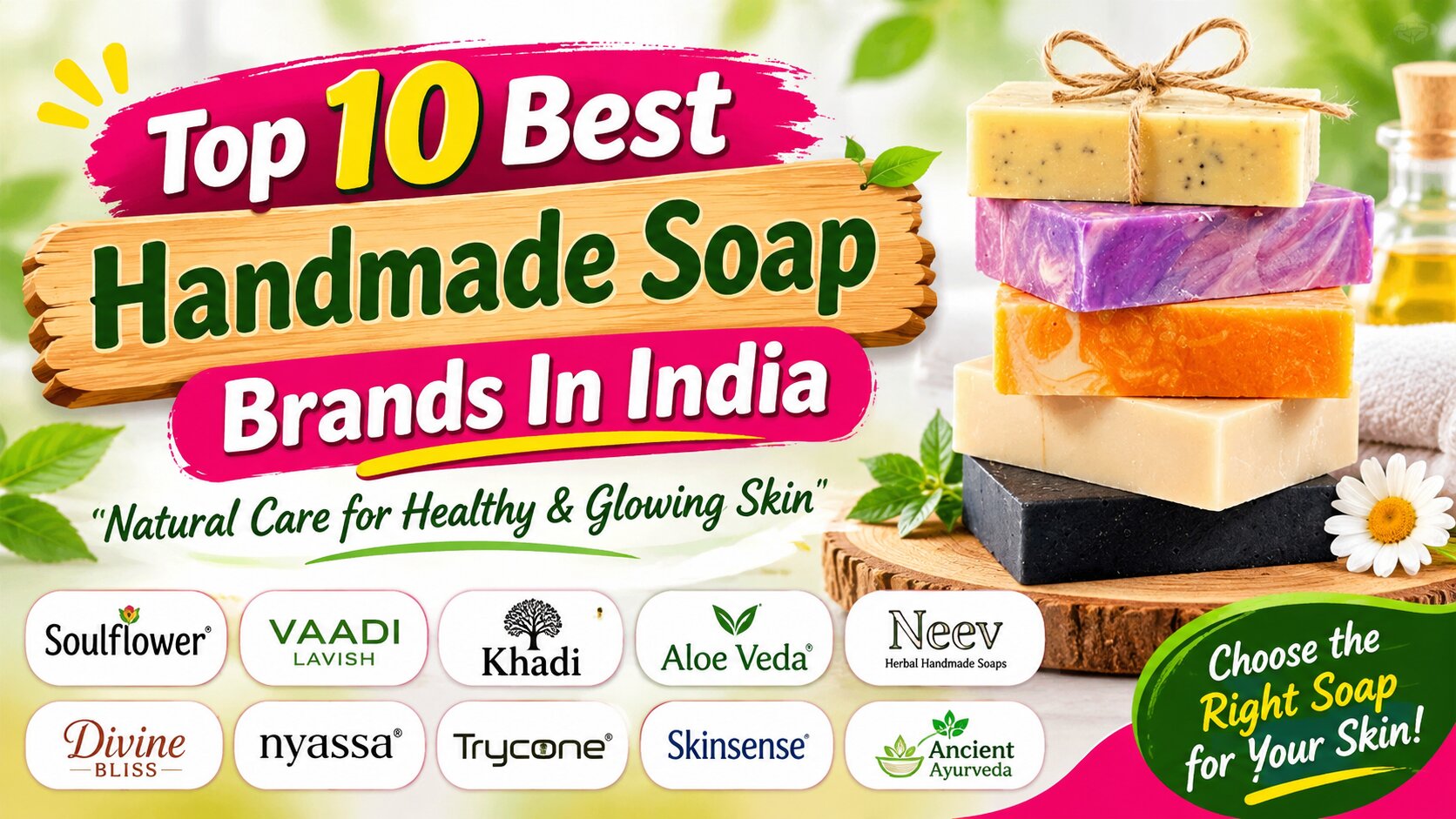
Top 10 Best Handmade Soap Brands in India
Here is a quick overview of the 10 handmade soap brands covered in this article.
| No. | Brand Name | Popular Soap | Main Ingredients / Focus |
|---|---|---|---|
| 1 | Soulflower | Milk Cocobar Soap | Milk and cocoa butter |
| 2 | Vaadi Lavish | Almond Soap | Almond, honey and aloe vera |
| 3 | Khadi | Aloe Vera Soap | Aloe vera and herbal ingredients |
| 4 | Aloe Veda | Luxury Butter Bathing Bar | Cocoa butter and oatmeal |
| 5 | Neev | Almond Rose Soap | Almond and rose |
| 6 | Divine | Sandalwood Soap | Sandalwood and aromatic oils |
| 7 | Nyassa | Cocoa Butter Soap | Cocoa butter and vitamin E |
| 8 | Trycone | Handmade Charcoal Soap | Activated charcoal |
| 9 | Skinsense | Natural Luxury Soaps | Natural ingredient-based formulations |
| 10 | Ancient Ayurveda | Natural Soaps | Ayurvedic-inspired ingredients |
Product availability and formulations may change. Always check the current product label and ingredient list before purchasing.
Soulflower Milk Cocobar Soap
Soulflower is a popular Indian skincare and personal care brand offering a variety of natural-inspired beauty and bathing products. The brand provides different handmade soap options featuring botanical ingredients, oils, and other skincare components.
One of the featured products is Soulflower Milk Cocobar Soap. This soap is associated with ingredients such as milk, cocoa butter, vitamin E, rice bran, and other moisturizing components.
Cocoa butter is commonly used in skincare products because of its emollient properties, while milk-based ingredients are often included in bathing products for their conditioning qualities.
Soulflower is worth exploring if you prefer handmade-style bathing products with ingredient-focused formulations and different fragrance options.
Key Features:
- Handmade soap options.
- Milk and cocoa butter-based formulations.
- Different botanical and oil-based soap varieties.
- Moisturizing ingredient options.
- Products for everyday bathing routines.
Best For: People interested in handmade-style soaps with nourishing ingredients, particularly those who prefer cocoa butter and milk-based formulations.
Vaadi Lavish Almond Soap
Vaadi Lavish is a personal care brand offering herbal-inspired skincare and beauty products. Its product collection includes soaps, face care products, body care essentials, and other personal grooming items.
Vaadi Lavish Almond Soap is a featured product that combines ingredients such as almond, honey, and aloe vera extracts.
Almond-based ingredients are commonly used in skincare formulations for their conditioning properties. Honey is another popular ingredient in personal care products, while aloe vera is often included in skin-conditioning formulations.
This soap is worth considering if you prefer traditional herbal-inspired bathing products with almond-based ingredients.
Key Features:
- Almond-based soap formulation.
- Honey and aloe vera ingredients.
- Herbal-inspired skincare range.
- Suitable for regular bathing routines, depending on skin compatibility.
- Affordable personal care product options.
Best For: People who prefer almond-based and herbal-inspired bathing products for everyday personal care.
Khadi Aloe Vera Soap
Khadi is a recognised Indian personal care brand associated with traditional herbal and Ayurvedic-inspired products. The brand offers a wide variety of soaps, shampoos, oils, and other personal care essentials.
Khadi Aloe Vera Soap is a popular product choice for people interested in aloe vera-based bathing products.
Aloe vera is commonly used in skincare because of its skin-conditioning and soothing properties. Depending on the formulation, the soap may also contain vegetable oils, glycerin, and other cleansing ingredients.
Khadi offers different soap varieties, making it easier for consumers to explore products according to their fragrance and ingredient preferences.
Key Features:
- Aloe vera-based soap options.
- Herbal-inspired personal care products.
- Different soap varieties.
- Options for everyday bathing.
- Traditional skincare product positioning.
Best For: People looking for aloe vera-based and herbal-inspired soaps for regular bathing.
Aloe Veda Luxury Butter Bathing Bar
Aloe Veda is a skincare and personal care brand offering products inspired by natural ingredients and traditional beauty formulations.
Its Luxury Butter Bathing Bar is a featured soap that includes ingredients such as cocoa butter, palm kernel oil, oatmeal milk, cinnamon oil, and wheat germ oil, according to the original product description.
Cocoa butter and wheat germ oil are commonly used in moisturizing skincare products. Oatmeal-based ingredients are also popular in personal care formulations because of their skin-conditioning properties.
The product is worth exploring if you prefer richer bathing bars with butter-based ingredients and a more nourishing bathing experience.
Key Features:
- Luxury butter bathing bar.
- Cocoa butter-based formulation.
- Oatmeal milk and wheat germ oil.
- Rich bathing product texture.
- Suitable for people who prefer nourishing soap formulations.
Best For: People who prefer richer bathing bars featuring cocoa butter and other conditioning ingredients.
Neev Almond Rose Soap

Neev is an Indian brand associated with natural-inspired personal care and handcrafted products. Its product range includes bathing soaps made with different oils, botanical ingredients, and traditional fragrance combinations.
Neev Almond Rose Soap is a featured product that combines almond and rose-inspired ingredients.
Almond oil is commonly used in skincare formulations because of its emollient properties, while rose-based ingredients are popular for their fragrance and skin-conditioning qualities.
The combination of almond and rose makes this soap an interesting option for people who enjoy traditional bathing products with floral fragrances.
Key Features:
- Almond and rose-inspired formulation.
- Natural oil-based soap options.
- Traditional floral fragrance.
- Handmade-style bathing product range.
- Suitable for regular personal care, depending on the formulation.
Best For: People who enjoy almond-based soaps and refreshing floral fragrances.
Divine Sandalwood Soap
Divine Sandalwood Soap is a sandalwood-inspired bathing product included in the original Pumky handmade soap list.
Sandalwood has a long history of use in traditional Indian beauty and personal care routines. Its distinctive fragrance makes it a popular ingredient in soaps, creams, and other bathing products.
The featured Divine Sandalwood Soap is associated with sandalwood, rosewood, and cedarwood-inspired aromatic ingredients.
These ingredients create a traditional woody fragrance profile that can make everyday bathing more refreshing.
If you prefer classic Indian fragrances and traditional bathing products, sandalwood soap is worth exploring.
Key Features:
- Sandalwood-inspired formulation.
- Woody and aromatic fragrance profile.
- Traditional Indian bathing experience.
- Suitable for people who enjoy herbal-inspired products.
- Fragrance-focused bathing option.
Best For: People who prefer sandalwood fragrances and traditional-inspired bathing products.
Nyassa Cocoa Butter Soap

Nyassa is a personal care and bath product brand offering a variety of soaps and body care products.
Nyassa Cocoa Butter Soap is a featured product known for its cocoa butter-inspired formulation. The original product description also mentions ingredients such as fruit extracts, vanilla, almond oil, aloe vera, and vitamin E.
Cocoa butter is commonly included in skincare products because it helps condition the skin and reduce the feeling of dryness. Almond oil and aloe vera are also popular ingredients in personal care formulations.
Nyassa is worth exploring if you prefer premium-style bathing products with distinctive fragrances and nourishing ingredient combinations.
Key Features:
- Cocoa butter-based soap option.
- Vanilla and fruit-inspired fragrance combinations.
- Almond oil and aloe vera in the featured formulation.
- Vitamin E in selected product formulations.
- Premium-style bathing products.
Best For: People who enjoy cocoa butter-based soaps and rich, aromatic bathing products.
Trycone Handmade Charcoal Soap

Trycone is featured in the original list for its Handmade Charcoal Soap, which is designed around activated charcoal as a cleansing ingredient.
Activated charcoal is commonly used in personal care products such as soaps, face washes, and cleansing masks. It is included in these formulations for its adsorption properties and its appeal in products designed for oily-skin cleansing routines.
Charcoal soaps are often chosen by people who prefer a deeper-cleansing bathing experience.
However, activated charcoal does not automatically make a soap an acne treatment or guarantee that it will remove blackheads. The overall formulation and individual skin response matter.
Key Features:
- Activated charcoal-based soap.
- Deep-cleansing product positioning.
- Suitable for people who prefer charcoal-based skincare.
- Different cleansing ingredient combinations.
- Alternative to traditional fragranced bathing bars.
Best For: People with normal or oily skin who prefer charcoal-based cleansing products and find the formulation comfortable for their skin.
Skinsense Natural Luxury Soaps

Skinsense is included in the original Pumky list for its Natural Luxury Soaps.
Natural-inspired luxury soaps generally focus on ingredient combinations such as plant-derived oils, glycerin, herbal extracts, and other skin-conditioning components.
Glycerin is a humectant that helps attract water to the outer layer of the skin. It is commonly used in personal care products to support skin hydration.
When choosing Skinsense or any other handmade soap, check the product's complete ingredient list to understand its cleansing base, fragrance components, and potential allergens.
This is especially important for people who have sensitive skin or known ingredient allergies.
Key Features:
- Natural-inspired soap varieties.
- Luxury bathing product options.
- Glycerin-based formulations where listed.
- Different fragrance and ingredient combinations.
- Options for everyday personal care.
Best For: People interested in natural-inspired luxury bathing products and different soap formulations.
Ancient Ayurveda Natural Soaps
Ancient Ayurveda is included in the original list for its Ayurvedic-inspired natural soap range.
Ayurvedic-inspired soaps often feature traditional Indian ingredients such as neem, aloe vera, sandalwood, turmeric, and other botanical extracts.
These ingredients have a long history of use in traditional personal care routines and are commonly included in modern herbal bathing products.
Ancient Ayurveda Natural Soaps are worth exploring if you prefer traditional ingredient combinations and herbal-inspired skincare products.
Before purchasing, check whether the specific soap matches your skin type and whether it contains fragrance or other ingredients that may cause irritation.
Key Features:
- Ayurvedic-inspired soap varieties.
- Traditional botanical ingredients.
- Natural-inspired personal care products.
- Different fragrance and formulation options.
- Suitable for people interested in herbal bathing products.
Best For: People who prefer Ayurvedic-inspired bathing products and traditional Indian skincare ingredients.
Benefits of Using Handmade Soaps
Handmade soaps can offer a different bathing experience compared with many mass-produced bathing products. Their ingredients, textures, fragrances, and production methods can vary from one brand to another.
Here are some features that make handmade soaps popular.
1. Different Natural Oil Formulations
Many handmade soap makers use oils such as coconut oil, olive oil, castor oil, almond oil, and other plant-derived ingredients.
These oils contribute to the cleansing properties, texture, and conditioning characteristics of the finished soap.
2. Variety of Ingredients
Handmade soaps are available in different ingredient combinations, including aloe vera, neem, sandalwood, charcoal, cocoa butter, turmeric, and rose.
This variety allows customers to explore products according to their personal preferences.
3. Unique Fragrances
Many handmade soap brands offer distinctive fragrances using essential oils, botanical extracts, or fragrance compositions.
Popular options include lavender, sandalwood, rose, vanilla, citrus, and herbal fragrances.
4. Different Soap-Making Methods
Some handmade soaps are made using the cold-process method, while others may use hot-process or melt-and-pour techniques.
Cold-process soap is generally made by combining oils with an alkali solution and allowing the mixture to undergo saponification and curing.
5. Small-Batch Production
Some handmade soap brands produce soaps in smaller batches, which can allow more variation in fragrances, ingredients, colours, and designs.
However, the quality and consistency depend on the manufacturer's production standards.
How to Choose the Best Handmade Soap According to Your Skin Type?
Not every handmade soap is suitable for everyone. Choosing the right product depends on your skin type, ingredient preferences, and sensitivity.
1. Handmade Soap for Dry Skin
Dry skin may feel tight, rough, or flaky after bathing. People with dry skin may prefer gentle cleansing products containing moisturizing ingredients.
Look for:
- Glycerin.
- Shea butter.
- Cocoa butter.
- Olive oil.
- Almond oil.
Soulflower Milk Cocobar Soap, Aloe Veda Luxury Butter Bathing Bar, and Nyassa Cocoa Butter Soap are options worth exploring based on their featured ingredients.
2. Handmade Soap for Oily Skin
Oily skin produces excess sebum, which can make the skin feel greasy.
People with oily skin may prefer cleansing products that remove excess oil without leaving the skin feeling excessively dry.
Look for:
- Mild cleansing formulations.
- Charcoal-based products.
- Aloe vera-based ingredients.
- Suitable non-irritating formulations.
Trycone Handmade Charcoal Soap and Khadi Aloe Vera Soap are options to explore.
3. Handmade Soap for Sensitive Skin
Sensitive skin may react to fragrance, essential oils, botanical extracts, or certain cleansing ingredients.
People with sensitive skin should consider products with simple formulations and avoid ingredients they already know cause irritation.
Look for:
- Fragrance-free products.
- Mild cleansing ingredients.
- Shorter ingredient lists.
- Products designed for sensitive skin.
Remember that natural or handmade does not automatically mean hypoallergenic. For very sensitive or eczema-prone skin, a dermatologist may recommend a fragrance-free, soap-free cleanser instead.
4. Handmade Soap for Normal Skin
Normal skin generally has a balanced moisture level and may tolerate a wider variety of bathing products.
You can explore different handmade soap varieties according to your fragrance and ingredient preferences.
Options include:
- Sandalwood soap.
- Almond soap.
- Rose soap.
- Aloe vera soap.
- Cocoa butter soap.
Important Ingredients to Look for in Handmade Soaps
Before buying handmade soap, it is useful to understand the purpose of commonly used ingredients.
| Ingredient | Common Use in Skincare |
|---|---|
| Aloe Vera | Skin conditioning and soothing formulations |
| Cocoa Butter | Emollient and moisturizing benefits |
| Almond Oil | Skin conditioning |
| Glycerin | Helps attract moisture |
| Neem | Traditional herbal skincare ingredient |
| Sandalwood | Traditional fragrance and skincare ingredient |
| Activated Charcoal | Used in cleansing formulations |
| Rose Extract | Fragrance and skin conditioning |
| Olive Oil | Emollient used in soap formulations |
| Shea Butter | Helps condition and soften skin |
The actual benefits depend on the concentration, formulation, and how the product is used.
Handmade Soap vs Regular Commercial Soap: What Is the Difference?
Handmade and commercially manufactured soaps can differ in their ingredients, production methods, packaging, and product positioning.
| Feature | Handmade Soap | Commercial Soap |
|---|---|---|
| Production | Often small-batch | Usually large-scale |
| Ingredients | May feature plant oils and botanicals | Varies by formulation |
| Fragrance | Essential oils or fragrance compositions | Fragrance compositions |
| Variety | Different handcrafted formulations | Wide range of mass-market options |
| Appearance | May have handmade variations | Usually uniform |
| Pricing | Can be affordable or premium | Available across price ranges |
| Availability | Depends on brand and seller | Generally widely available |
Neither category is automatically better for every skin type. The ingredients and finished formulation matter more than the manufacturing label.
Tips for Using Handmade Soaps
Follow these simple tips to make your bathing routine more comfortable.
- Choose According to Your Skin Type: Select a soap that suits your skin's cleansing and hydration requirements.
- Check the Ingredients: Review the complete ingredient list, especially if you have sensitive skin or known allergies.
- Avoid Excessive Scrubbing: Use gentle movements while washing your skin.
- Use Comfortable Water Temperature: Avoid very hot water, which can contribute to skin dryness.
- Apply Moisturizer After Bathing: Applying moisturizer while the skin is slightly damp helps retain moisture.
- Store Soap Properly: Keep handmade soap on a draining soap dish so that it can dry between uses.
- Avoid Sharing Personal Bathing Products: Use your own soap and keep it clean and dry.
- Stop Using Irritating Products: If a soap causes itching, redness, burning, or discomfort, discontinue use.
Conclusion
Handmade soaps are a popular choice for people who enjoy exploring different skincare ingredients, fragrances, and traditional bathing products. With so many options available in India, it is important to choose a soap that matches your personal preferences and skin requirements.
Brands such as Soulflower, Vaadi Lavish, Khadi, Aloe Veda, Neev, Divine, Nyassa, Trycone, Skinsense, and Ancient Ayurveda offer different handmade-style and ingredient-focused soap options.
Whether you prefer the nourishing feel of cocoa butter, the traditional fragrance of sandalwood, the freshness of aloe vera, or charcoal-based cleansing products, there are different varieties worth exploring.
Before purchasing, always check the ingredient list, product availability, and suitability for your skin type.
Remember: The best handmade soap is not necessarily the most expensive or the one with the most natural ingredients. It is the product that cleanses comfortably and suits your individual skincare needs.
FAQs
1. Which is the Best Handmade Soap Brand in India?
Popular options in this article include Soulflower, Vaadi Lavish, Khadi, Aloe Veda, Neev, Divine, Nyassa, Trycone, Skinsense, and Ancient Ayurveda. The best choice depends on your preferred ingredients, skin type, and budget.
2. Are Handmade Soaps Better than Regular Soaps?
Handmade soaps offer different ingredient combinations and production methods. However, they are not automatically better than commercially manufactured soaps. The quality of ingredients and the finished formulation determine how suitable a product is for your skin.
3. Which Handmade Soap is Best for Dry Skin?
People with dry skin may prefer soaps featuring moisturizing ingredients such as cocoa butter, glycerin, shea butter, and suitable plant oils. Soulflower Milk Cocobar, Aloe Veda Luxury Butter Bathing Bar, and Nyassa Cocoa Butter Soap are options to explore.
4. Which Handmade Soap is Best for Oily Skin?
People with oily skin may prefer mild cleansing formulations. Trycone Handmade Charcoal Soap is one option to explore, but charcoal does not guarantee acne treatment or oil control.
5. Are Handmade Soaps Suitable for Sensitive Skin?
Some handmade soaps may be suitable for sensitive skin, but natural ingredients and essential oils can also trigger irritation or allergies. Look for gentle, fragrance-free formulations and patch-test new products.
6. Can Handmade Soaps Help with Acne?
Handmade soaps are primarily cleansing products, not medical acne treatments. Ingredients such as charcoal and neem are commonly used in skincare, but there is limited evidence that ordinary handmade soaps can treat acne. Consult a dermatologist for persistent acne.
7. Do Handmade Soaps Contain Glycerin?
Many traditional handmade soaps retain naturally produced glycerin after the soap-making process. However, the amount depends on the manufacturing method and formulation. Check the product ingredients and manufacturer's information.
8. How Long Does Handmade Soap Last?
The lifespan of handmade soap depends on its size, formulation, frequency of use, and storage conditions. Keeping it on a well-drained soap dish and allowing it to dry between uses can help it last longer.
9. Are Handmade Soaps Chemical-free?
No soap is completely chemical-free. Handmade soaps may contain naturally derived oils, alkalis, fragrances, and other ingredients. Always review the ingredient list rather than relying only on marketing claims.
10. Can Men and Women Use Handmade Soaps?
Yes. Most general bathing soaps can be used by adults regardless of gender. The important factors are skin type, ingredient compatibility, fragrance preference, and product instructions.
.jpg)