Which Cotton Saree Brand is Famous in India
Cotton sarees have been an important part of Indian fashion for generations. Known for their breathable fabric, lightweight feel and timeless elegance, they are particularly popular among women who prefer comfortable…

Published Updated 17 min read

In this article
Cotton sarees have been an important part of Indian fashion for generations. Known for their breathable fabric, lightweight feel and timeless elegance, they are particularly popular among women who prefer comfortable ethnic clothing. From everyday office wear to traditional celebrations, cotton sarees offer a beautiful combination of style, comfort and cultural heritage.
India has a remarkable textile tradition, with almost every region known for its distinctive weaving techniques, embroidery styles, patterns and fabric varieties. Some sarees are recognised for their crisp cotton texture, while others are admired for intricate threadwork, geometric patterns, colourful borders and traditional motifs.
Whether you prefer a simple handwoven saree or an intricately decorated design, there are plenty of Indian cotton saree varieties to explore.
In this article, we will discover 14 famous types of cotton sarees brand in India, including Tant, Khadi, Dhakai, Lucknowi Chikan, Sambalpuri, Kanjeevaram, Kotki, Bomkai, Pochampally, Jamdani, Pasapalli, Chanderi, Supernet and Kota. Learn about their origins, special features, traditional craftsmanship and the occasions for which they are suitable.
14 Famous Types of Cotton Sarees in India: Traditional Weaves, Designs and Their Origins
Table of Contents
- 14 Famous Types of Cotton Sarees in India: Traditional Weaves, Designs and Their Origins
- Tant Saree – The Traditional Bengali Cotton Saree
- Khadi Saree – A Symbol of Indian Heritage and Simplicity
- Dhakai Saree – Elegant Traditional Weaving from Dhaka
- Lucknowi Chikan Saree – Beautiful Hand Embroidery from Uttar Pradesh
- Sambalpuri Saree – The Colourful Ikat Heritage of Odisha
- Kanjeevaram Saree – Traditional Elegance from Tamil Nadu
- Kotki Saree – Traditional Designs with Decorative Borders
- Bomkai Saree – Intricate Handloom Craftsmanship from Odisha
- Pochampally Saree – Beautiful Ikat Patterns from Telangana
- Jamdani Saree – Fine Handwoven Beauty and Intricate Motifs
- Pasapalli Saree – The Traditional Checked Saree from Odisha
- Chanderi Saree – Lightweight Elegance from Madhya Pradesh
- Supernet Saree – Lightweight and Sheer Modern Saree Style
- 14. Kota Saree – The Delicate Cotton Weave of Rajasthan
- Comparison of 14 Famous Cotton Saree Types in India
- How to Choose the Right Cotton Saree?
Tant Saree – The Traditional Bengali Cotton Saree
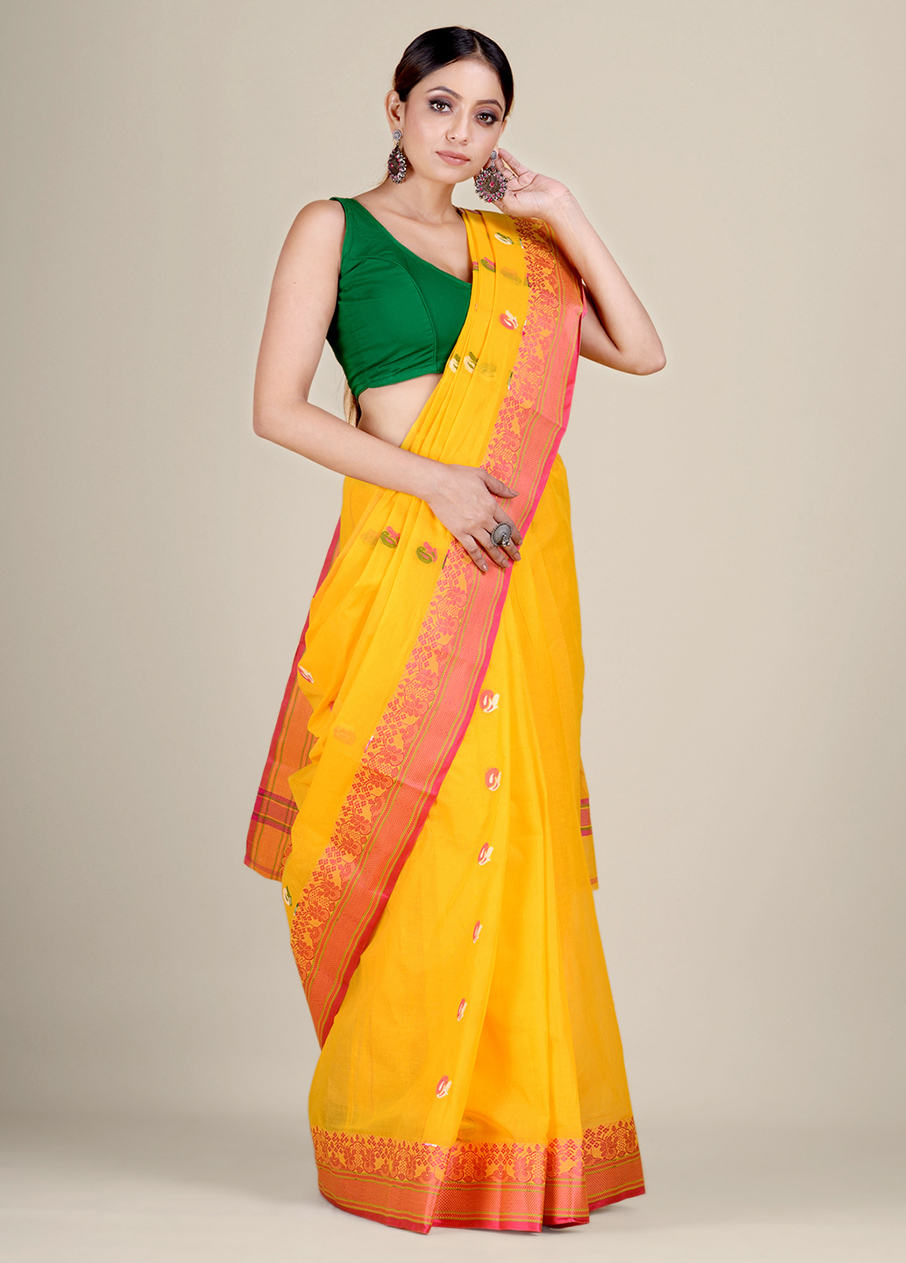
The Tant saree is one of the most recognised traditional cotton sarees from West Bengal. It is loved for its crisp texture, lightweight feel and comfortable drape, making it a popular choice for everyday wear, especially during warmer months.
The word 'Tant' refers to a loom in Bengali, and these sarees are traditionally produced using handloom weaving techniques. Important weaving centres include Shantipur, Phulia and Dhaniakhali in West Bengal.
One of the most attractive features of a Tant saree is its structured appearance. The fabric often has a slightly starched finish that helps maintain its shape. Traditional designs include contrasting borders, floral motifs, checks, stripes and decorative pallus.
Red-and-white Tant sarees are particularly popular during Bengali festivals and cultural celebrations. However, modern collections are also available in pastel shades, vibrant colours and contemporary patterns.
Key Features of Tant Sarees:
- Traditionally woven using cotton yarn.
- Lightweight and breathable fabric.
- Crisp texture with a structured drape.
- Contrasting borders and decorative pallus.
- Traditional floral, geometric and striped patterns.
Best Occasions: Everyday wear, office wear, Durga Puja, cultural celebrations and casual family gatherings.
Khadi Saree – A Symbol of Indian Heritage and Simplicity

Khadi sarees are known for their connection with India's freedom movement and traditional textile craftsmanship. Unlike ordinary mill-made fabrics, khadi is made from yarn that is handspun and then woven on a handloom.
Khadi became a powerful symbol of self-reliance during India's independence movement. Mahatma Gandhi encouraged people to use locally produced khadi instead of imported British textiles. Over time, this traditional fabric developed into an important part of Indian fashion.
Khadi cotton sarees are appreciated for their natural texture, simple appearance and comfortable feel. They are commonly available in earthy colours such as beige, off-white, brown, grey and natural white, although modern designs also feature brighter shades and decorative borders.
Their understated appearance makes them particularly attractive to women who prefer minimal and sustainable fashion.
Key Features of Khadi Sarees
- Made using handspun cotton yarn and handloom weaving.
- Natural texture and simple appearance.
- Available in earthy and contemporary colours.
- Comfortable and breathable fabric.
- Represents traditional Indian craftsmanship.
Best Occasions: Office wear, casual outings, cultural events and everyday styling.
Dhakai Saree – Elegant Traditional Weaving from Dhaka

Dhakai sarees are associated with Dhaka, a historic centre of fine cotton weaving in present-day Bangladesh. They are admired for their delicate fabric, intricate motifs and beautiful traditional craftsmanship.
The most recognised variety is Dhakai Jamdani, which is known for its detailed woven patterns. These designs are not simply printed or embroidered onto the fabric. Instead, decorative motifs are created directly during the weaving process using additional weft threads.
Traditional Dhakai sarees often feature floral patterns, paisley designs, geometric motifs and delicate decorative borders. White, off-white and pastel shades are popular, although contemporary collections also feature vibrant colours.
The fine texture and elegant appearance make Dhakai sarees a wonderful option for women who appreciate traditional handwoven textiles.
Key Features of Dhakai Sarees:
- Historic weaving tradition associated with Dhaka.
- Fine cotton fabric and delicate texture.
- Intricate floral and geometric motifs.
- Lightweight and elegant appearance.
- Traditional handwoven craftsmanship.
Best Occasions: Festivals, cultural functions, family gatherings and traditional celebrations.
Lucknowi Chikan Saree – Beautiful Hand Embroidery from Uttar Pradesh

Lucknowi Chikan sarees are famous for their delicate hand embroidery and sophisticated appearance. Originating in Lucknow, Uttar Pradesh, Chikankari is a traditional embroidery craft that has become an important part of Indian ethnic fashion.
The word 'Chikan' refers to embroidery, and this craft involves different stitches that create beautiful floral, leafy and geometric patterns on fabric.
Traditional Chikankari work was commonly done using white thread on light-coloured fabrics. Today, the craft is also available in a variety of colours and fabric combinations, including cotton, muslin, chiffon and other lightweight materials.
Cotton Chikan sarees are especially popular because they combine the comfort of cotton with the beauty of intricate handwork. Their elegant appearance makes them suitable for both everyday styling and special occasions.
Key Features of Lucknowi Chikan Sarees:
- Traditional hand embroidery from Lucknow.
- Delicate floral and nature-inspired motifs.
- Different embroidery stitches and patterns.
- Available in cotton and other lightweight fabrics.
- Elegant and sophisticated appearance.
Best Occasions: Office wear, summer outings, festive gatherings, daytime functions and family celebrations.
Sambalpuri Saree – The Colourful Ikat Heritage of Odisha

Sambalpuri sarees are among the most recognised traditional handloom textiles of Odisha. They are particularly famous for their distinctive Bandha or Ikat weaving technique, which involves tie-dyeing yarns before weaving them into fabric.
Unlike ordinary printed sarees, Sambalpuri sarees develop their patterns through carefully planned dyeing of the threads. The yarns are tied in specific sections to prevent dye from reaching certain areas. Once woven, these dyed threads create beautiful geometric and traditional designs.
Popular Sambalpuri motifs include conch shells, flowers, fish, wheels, elephants and other cultural symbols. The sarees often feature colourful borders and intricately patterned pallus.
Both cotton and silk varieties are available, making Sambalpuri sarees suitable for different occasions and fashion preferences.
Key Features of Sambalpuri Sarees:
- Traditional Bandha or Ikat technique.
- Tie-dyed yarns before weaving.
- Distinctive geometric and cultural motifs.
- Colourful borders and decorative pallus.
- Available in cotton and silk varieties.
Best Occasions: Festivals, cultural celebrations, office wear and traditional family functions.
Sambalpuri Bandha Sarees and Fabrics have a registered Geographical Indication (GI), reflecting their connection with Odisha's weaving heritage.
Kanjeevaram Saree – Traditional Elegance from Tamil Nadu

Kanjeevaram sarees, also commonly known as Kanchipuram sarees, are among the most celebrated traditional sarees of South India. They originate from Kanchipuram in Tamil Nadu, a region famous for its rich textile and weaving heritage.
Kanjeevaram sarees are especially recognised for their luxurious silk fabric, rich colours, broad borders and intricate zari work. Traditional motifs often include temple designs, peacocks, flowers, checks and other cultural patterns.
Although silk Kanjeevaram sarees are much more famous, cotton and cotton-blend variations are also available for women who prefer lighter fabrics.
A cotton Kanjeevaram-style saree can offer a traditional appearance while being more comfortable for regular use than a heavy silk version.
Key Features of Kanjeevaram Sarees:
- Traditional weaving heritage of Kanchipuram.
- Famous for rich silk and zari designs.
- Traditional temple-inspired borders and motifs.
- Cotton and lighter variations also available.
- Classic South Indian colour combinations.
Best Occasions: Weddings, religious ceremonies, festivals and traditional family celebrations.
Important: Kanjeevaram is best known as a silk saree tradition. Not every Kanjeevaram-style cotton saree should be described as an authentic Kanchipuram silk saree.
Kotki Saree – Traditional Designs with Decorative Borders

Kotki is a name used in the original article for a Bengali-style saree design recognised by its decorative temple-inspired borders and understated colour combinations.
These sarees are described as having traditional border patterns that give them a distinctive ethnic appearance. Their relatively simple body and decorative edges can create an elegant look without heavy embellishment.
Muted shades, earthy colours and traditional motifs are suitable choices for women who prefer simple sarees with a cultural touch.
However, the term 'Kotki' is not as widely documented as established Indian handloom names such as Tant, Chanderi or Sambalpuri. It is important not to confuse it with Kotpad, a separate and well-documented Odisha handloom tradition.
Key Features of the Kotki Style
- Traditional Bengali-inspired design.
- Decorative temple-style borders.
- Muted and understated colour combinations.
- Simple body patterns.
- Suitable for traditional everyday styling.
Best Occasions: Casual outings, daytime functions and everyday ethnic wear.
Bomkai Saree – Intricate Handloom Craftsmanship from Odisha

Bomkai sarees are traditional handloom textiles from Odisha, recognised for their detailed borders, decorative pallus and distinctive woven motifs.
The style takes its name from Bomkai village in Ganjam district. It is also associated with weaving centres in western Odisha, particularly the Subarnapur region.
One of the most attractive features of a Bomkai saree is its detailed pattern work. Traditional designs include flowers, geometric shapes, temple-inspired motifs, fish and other cultural elements.
The borders and pallus often feature supplementary weft designs, which give the fabric a rich and textured appearance. Some Bomkai sarees also incorporate Ikat patterns, creating an interesting combination of weaving techniques.
Bomkai sarees are available in cotton, silk and other traditional fabric combinations.
Key Features of Bomkai Sarees:
- Traditional handloom heritage of Odisha.
- Decorative woven borders and pallus.
- Intricate geometric and nature-inspired motifs.
- Extra-weft and extra-warp design techniques.
- Available in cotton and silk varieties.
Best Occasions: Weddings, festivals, cultural events and traditional celebrations.
Bomkai Saree and Fabrics are recognised under India's Geographical Indication system.
Pochampally Saree – Beautiful Ikat Patterns from Telangana

Pochampally sarees are famous for their beautiful Ikat patterns and traditional weaving techniques. They originate from Bhoodan Pochampally and surrounding weaving areas in Telangana.
The distinctive feature of Pochampally sarees is their resist-dyeing technique. Before weaving, selected yarns are tied and dyed according to a carefully planned pattern. When the threads are woven together, they create beautiful geometric designs.
Popular patterns include diamonds, squares, zigzags, stripes and other symmetrical arrangements. The colour combinations can range from traditional red, black and white to modern pastel and vibrant shades.
Pochampally sarees are available in cotton, silk and cotton-silk variations. Cotton versions are particularly suitable for women who prefer comfortable handloom sarees with attractive patterns.
Key Features of Pochampally Sarees:
- Traditional Ikat weaving technique.
- Yarn tie-dyeing before weaving.
- Distinctive geometric patterns.
- Colourful and symmetrical designs.
- Cotton, silk and blended fabric options.
Best Occasions: Office wear, festive gatherings, casual outings and cultural celebrations.
Pochampally Ikat received a registered GI tag in 2004, recognising its distinctive textile tradition and regional identity.
Jamdani Saree – Fine Handwoven Beauty and Intricate Motifs

Jamdani is one of the most admired traditional weaving techniques associated with fine cotton textiles. Historically connected with the Dhaka region, Jamdani is known for its delicate appearance and intricate decorative motifs.
Unlike printed designs, Jamdani patterns are created directly on the loom using supplementary discontinuous weft threads. This process requires considerable skill, patience and precision from the weaver.
Traditional Jamdani sarees often feature floral motifs, paisley patterns, leaves, geometric shapes and decorative designs spread across the body and pallu.
The fabric is generally lightweight and breathable, making it an attractive option for women who enjoy elegant traditional sarees.
Jamdani sarees are available in both subtle and vibrant colour combinations. White, off-white and pastel versions are particularly popular for their delicate appearance.
Key Features of Jamdani Sarees:
- Traditional handloom weaving technique.
- Intricate motifs created during weaving.
- Fine cotton fabric and delicate appearance.
- Floral, geometric and paisley patterns.
- Detailed craftsmanship requiring skilled weaving.
Best Occasions: Weddings, festivals, cultural celebrations and elegant daytime events.
The traditional art of Jamdani weaving was inscribed on UNESCO's Representative List of the Intangible Cultural Heritage of Humanity in 2013, representing Bangladesh's weaving heritage.
Pasapalli Saree – The Traditional Checked Saree from Odisha

Pasapalli sarees are a distinctive variety of Odisha's traditional Sambalpuri Bandha textiles. They are particularly famous for their attractive chequered patterns, which are often seen across the body and pallu.
The name Pasapalli is associated with the traditional game of dice, and its characteristic square patterns resemble a chequered game board.
These sarees are woven using the Bandha or Ikat technique, in which yarns are tied and dyed before weaving to create the desired patterns.
Traditional Pasapalli sarees often feature contrasting colours and geometric designs. Their distinctive checks make them visually different from many other Indian cotton sarees.
Cotton versions are suitable for everyday and festive styling, while richer silk varieties can be selected for special occasions.
Key Features of Pasapalli Sarees:
- Traditional handloom textile from Odisha.
- Distinctive square and chequered patterns.
- Bandha or Ikat weaving technique.
- Attractive contrasting colours.
- Decorative borders and patterned pallus.
Best Occasions: Festivals, cultural events, family functions and traditional gatherings.
Pasapalli is a recognised design variety within Odisha's Sambalpuri weaving tradition.
Chanderi Saree – Lightweight Elegance from Madhya Pradesh

Chanderi sarees are known for their lightweight texture, subtle shine and elegant appearance. They originate from Chanderi town in Madhya Pradesh, which has a long history of traditional handloom weaving.
These sarees are especially admired for their delicate fabric and beautiful motifs. Traditional Chanderi textiles are produced using cotton, silk and zari, depending on the variety.
Cotton Chanderi sarees are popular among women who prefer lightweight ethnic wear with a sophisticated appearance. They often feature floral motifs, traditional patterns, decorative borders and subtle zari detailing.
The fabric's slightly sheer appearance and graceful drape make it a suitable choice for women who want something elegant without choosing a heavily embellished saree.
Key Features of Chanderi Sarees:
- Traditional weaving heritage of Madhya Pradesh.
- Lightweight and slightly sheer fabric.
- Cotton, silk and cotton-silk variations.
- Subtle shine and delicate motifs.
- Elegant zari borders and traditional patterns.
Best Occasions: Office wear, festive gatherings, daytime weddings and family celebrations.
Chanderi sarees have a registered Geographical Indication, reflecting their regional weaving identity.
Supernet Saree – Lightweight and Sheer Modern Saree Style

Supernet sarees are known for their lightweight and sheer appearance. Unlike traditional regional sarees such as Tant, Sambalpuri or Chanderi, supernet generally refers to a fine, net-like fabric category rather than a specific handloom weaving tradition.
These sarees are often selected by women who prefer delicate-looking fabrics and modern ethnic styling. Depending on the material and construction, supernet sarees may feature decorative borders, embroidery, embellishments or printed designs.
Their lightweight appearance makes them an interesting choice for parties and special occasions. However, the fabric composition can vary, so it is important to check whether a particular saree is made from cotton, synthetic fibres or a blend.
Supernet sarees should not automatically be described as pure cotton or traditional handloom sarees.
Key Features of Supernet Sarees:
- Lightweight and sheer appearance.
- Fine net-like fabric construction.
- Available in different colours and designs.
- May feature embroidery and decorative borders.
- Modern styling options for special occasions.
Best Occasions: Parties, casual celebrations, evening gatherings and contemporary ethnic events.
14. Kota Saree – The Delicate Cotton Weave of Rajasthan

Kota sarees, particularly Kota Doria sarees, are famous for their delicate texture, lightweight fabric and distinctive square-check patterns. They originate from the Kota region of Rajasthan, with Kaithoon being an important weaving centre.
The most recognisable feature of Kota Doria fabric is its tiny square pattern, traditionally known as Khat. These small checks are created through a distinctive weaving arrangement using cotton and silk yarns.
Cotton provides strength to the fabric, while silk adds softness and a subtle sheen. Pure cotton varieties are also available.
Kota Doria sarees are popular among women who prefer lightweight ethnic clothing, especially during summer. Their elegant texture and simple patterns make them suitable for both casual and festive styling.
Some varieties also feature zari borders and decorative motifs, giving the saree a more traditional appearance.
Key Features of Kota Sarees:
- Traditional weaving heritage of Rajasthan.
- Distinctive square-check Khat patterns.
- Lightweight and breathable fabric.
- Cotton, silk and cotton-silk variations.
- Delicate texture with elegant borders.
Best Occasions: Office wear, summer outings, casual gatherings, religious functions and daytime celebrations.
Kota Doria is recognised as a Geographical Indication textile associated with Rajasthan.
Comparison of 14 Famous Cotton Saree Types in India
If you are unsure which saree to choose, this comparison can help you understand the different textile traditions and their special features.
| Saree Type | Origin / Association | Main Feature |
|---|---|---|
| Tant | West Bengal | Crisp cotton texture |
| Khadi | Across India | Handspun and handwoven fabric |
| Dhakai | Dhaka, Bangladesh | Fine weaving and decorative motifs |
| Lucknowi Chikan | Lucknow, Uttar Pradesh | Delicate hand embroidery |
| Sambalpuri | Odisha | Bandha or Ikat patterns |
| Kanjeevaram | Kanchipuram, Tamil Nadu | Rich traditional borders |
| Kotki | As described in the original article | Bengali-style temple borders |
| Bomkai | Odisha | Intricate woven motifs |
| Pochampally | Telangana | Geometric Ikat designs |
| Jamdani | Dhaka and Bengal weaving tradition | Supplementary weft motifs |
| Pasapalli | Odisha | Distinctive chequered patterns |
| Chanderi | Madhya Pradesh | Lightweight, sheer texture |
| Supernet | No specific regional origin | Fine, net-like fabric |
| Kota Doria | Rajasthan | Small square Khat patterns |
Important: These are not all pure cotton sarees. Some varieties are also produced in silk or cotton-silk blends, while Chikankari is an embroidery technique and Supernet is a fabric category.
How to Choose the Right Cotton Saree?
With so many traditional saree varieties available in India, selecting the right one depends on your comfort, personal style and the occasion.
Here are some important things to consider before purchasing a cotton saree.
1. Check the Fabric Quality
Always check the fabric composition before purchasing. Pure cotton, cotton-silk blends and other traditional fabrics have different textures and draping qualities.
If you want a saree for summer, lightweight cotton varieties such as Tant and Khadi can be good options.
2. Consider the Occasion
Choose your saree according to where you plan to wear it.
- Daily wear: Tant, Khadi and simple cotton sarees.
- Office wear: Chanderi cotton, Kota Doria and Tant.
- Festivals: Sambalpuri, Bomkai and Pasapalli.
- Weddings: Premium Chanderi, Jamdani and Kanjeevaram styles.
- Parties: Chikankari and contemporary lightweight sarees.
3. Choose the Right Colour and Design
Traditional sarees are available in a variety of colours and patterns. If you prefer minimal styling, choose pastel shades and subtle borders. For festive occasions, you can explore vibrant colours, traditional motifs and decorative pallus.
4. Check the Weaving and Craftsmanship
For handloom sarees, pay attention to the weaving details, fabric texture, borders and finishing. If you are purchasing a saree advertised as a traditional GI product, check its authenticity and seller credentials.
5. Select a Suitable Blouse Design
The right blouse can completely change the appearance of a saree. You can pair traditional cotton sarees with simple cotton blouses or experiment with designer blouses featuring embroidery, statement necklines, elbow-length sleeves and contemporary patterns.
Conclusion
India's cotton saree heritage represents centuries of traditional weaving, embroidery and textile craftsmanship. From the crisp texture of Bengali Tant sarees to the colourful Ikat patterns of Sambalpuri and Pochampally, every variety has its own distinctive identity.
If you prefer lightweight sarees for everyday wear, Tant, Khadi and Kota Doria are worth exploring. For intricate traditional designs, Jamdani, Bomkai and Sambalpuri offer beautiful choices. Meanwhile, Chanderi and Lucknowi Chikan sarees are excellent options for women who appreciate delicate details and elegant styling.
The best saree ultimately depends on your personal preferences, fabric requirements, budget and occasion. Exploring these traditional Indian saree varieties is also a wonderful way to appreciate the craftsmanship and cultural heritage of Indian textiles.
Whether you are looking for a comfortable office-wear saree, a traditional festive outfit or an elegant design for a family celebration, Indian cotton sarees offer something special for every wardrobe.
FAQs
1. Which are the Most Popular Types of Cotton Sarees in India?
Some popular varieties include Tant, Khadi, Dhakai, Sambalpuri, Bomkai, Pochampally, Jamdani, Pasapalli, Chanderi and Kota Doria. Each has its own weaving tradition, fabric characteristics and regional identity.
2. Which Cotton Saree is Best for Summer?
Tant, Khadi, lightweight Bengal cotton and pure cotton Kota varieties are popular choices for summer. Their breathable fabric and lightweight construction make them comfortable for warm weather.
3. Which State is Famous for Traditional Cotton Sarees?
West Bengal, Odisha, Rajasthan, Telangana, Tamil Nadu, Uttar Pradesh and Madhya Pradesh are known for different cotton and handloom textile traditions.
4. What is the Difference Between Jamdani and Dhakai Sarees?
Dhakai sarees are associated with the historic textile tradition of Dhaka, while Jamdani is a distinctive supplementary-weft weaving technique used to create decorative motifs. Dhakai Jamdani is one of the best-known combinations.
5. Which Cotton Saree is Best for office Wear?
Tant, Khadi, Chanderi cotton and Kota Doria are good options for office wear. Their elegant appearance and comfortable fabrics make them suitable for professional styling.
6. Are Sambalpuri Sarees made from Pure Cotton?
Sambalpuri sarees are available in cotton as well as silk and other fabric varieties. Always check the fabric composition before purchasing if you specifically want pure cotton.
7. What Makes a Pochampally Saree Different?
Pochampally sarees are recognised for their traditional Ikat technique. The yarns are tied and dyed before weaving, creating distinctive geometric patterns in the finished fabric.
8. Are Chanderi Sarees made from Cotton or Silk?
Chanderi sarees are available in cotton, silk and cotton-silk combinations. Traditional varieties are particularly appreciated for their lightweight and slightly sheer texture.
9. What is Special about Kota Doria Sarees?
Kota Doria sarees are known for their delicate square-check patterns called Khat. They are lightweight and traditionally woven using cotton and silk yarns.
10. How Can I identify an Authentic Handloom Cotton Saree?
Check the fabric composition, weaving details, seller information and applicable Handloom Mark or GI documentation. For expensive purchases, buy from established weavers, cooperatives or trusted retailers.